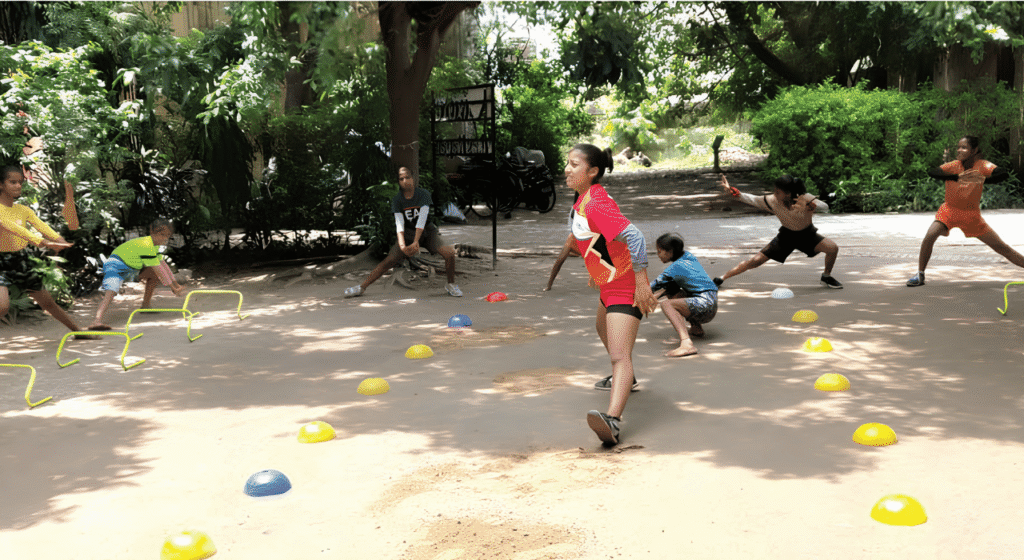

The COVID-19 pandemic drastically affected the lives of children across the country. With schools closed and access to regular play and physical activity disrupted, many children became more vulnerable due to lower levels of health, fitness and immunity.
As a response, Sportz Village Foundation launched a digital physical education programme to engage children during the lockdown.
The first phase of the programme was piloted with 30 children from government schools in Tamil Nadu over a period of six weeks.
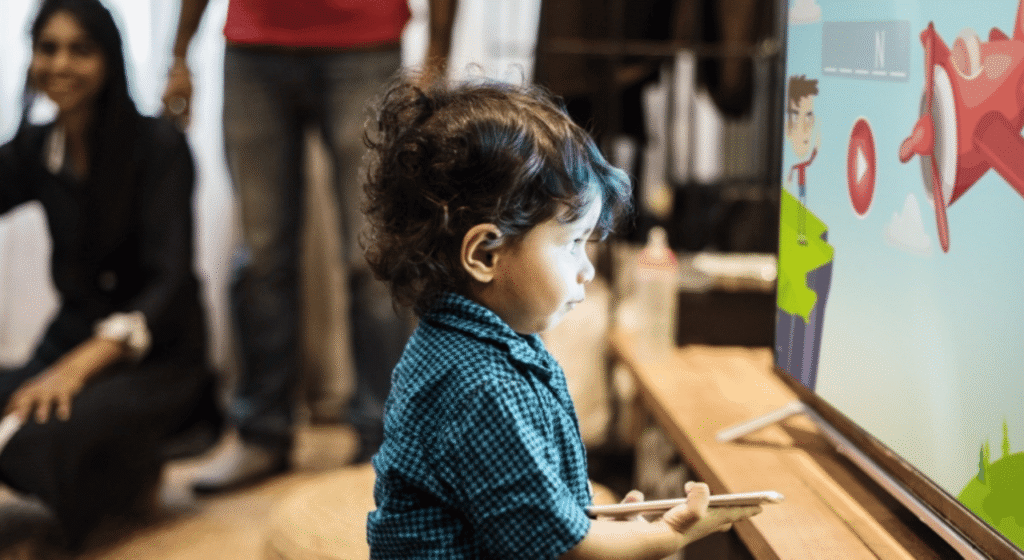
The programme was designed to help children remain physically active from home while also understanding how families, internet access and sibling participation influenced engagement.
Sportz Village Foundation evaluated the programme using four key indicators:
The digital programme was subsequently scaled to reach over 3,000 children.
The study found that 75% of children had access to stable internet.
Among the participating children, 61% engaged with the digital programme.
The overall distribution showed:
This highlights both the potential of digital physical education and the challenge of unequal access to internet connectivity.
Children who joined the programme showed very strong responsiveness to the activities assigned to them.
A total of 99% of children completed their assigned activities within 24 hours.
This suggests that most participating children were able to engage with the digital programme on a daily basis.
The pilot also assessed parental involvement.
Even though parental support was not available for every child, the programme demonstrated that children could still engage with activities independently or with support from other family members.
The programme encouraged children to involve others at home in their activities.
This shows that the programme was able to create opportunities for shared play and physical activity within households during the lockdown period.
The pilot demonstrated that digital physical education can help children remain active when regular sports programmes are disrupted.
The findings also show that children responded positively to structured daily activities, particularly when they had access to stable internet and opportunities to participate with siblings or cousins.
The programme offered a practical way to continue physical activity and engagement during a period when children had limited access to schools, playgrounds and organised sport.