Learning Through Play: Nurturing Problem Solvers of the Future

A Step Towards Teaching Computational Thinking Education Using Play

Computational Thinking Education, or STEM-based education, teaches children much more than science and mathematics concepts. With hands-on learning and real-world applications, it can help develop important 21st-century skills such as problem solving, critical thinking, creativity, curiosity, decision making, leadership, entrepreneurship and more.

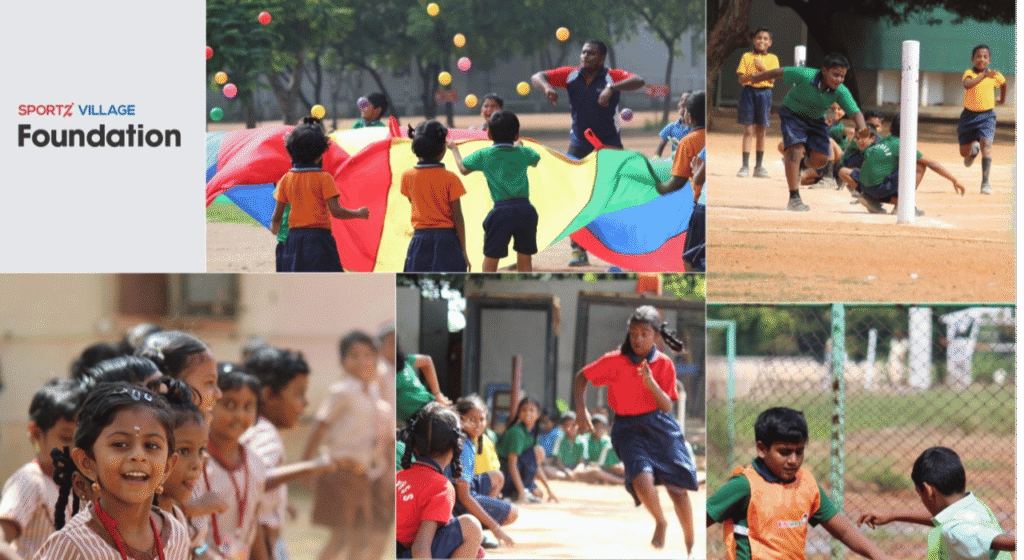
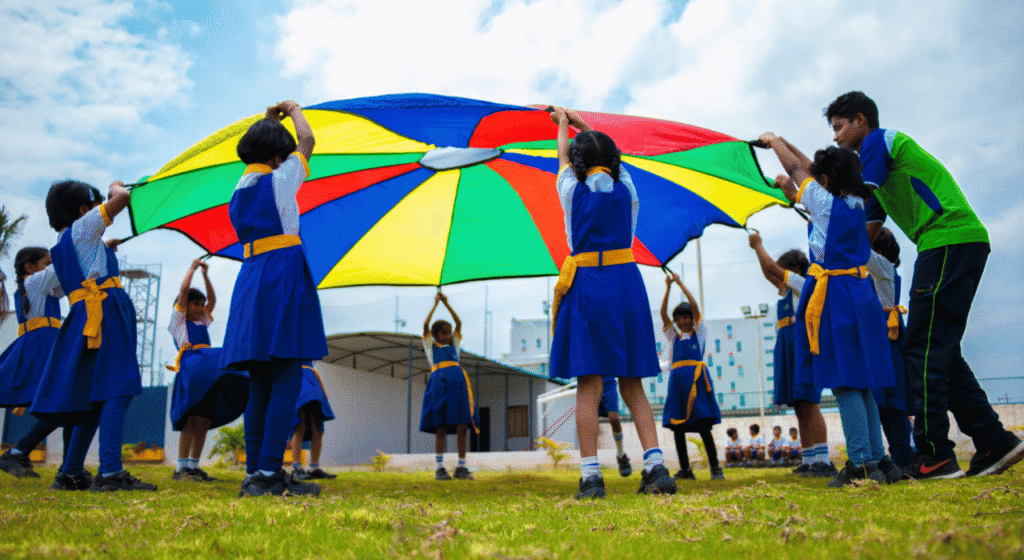
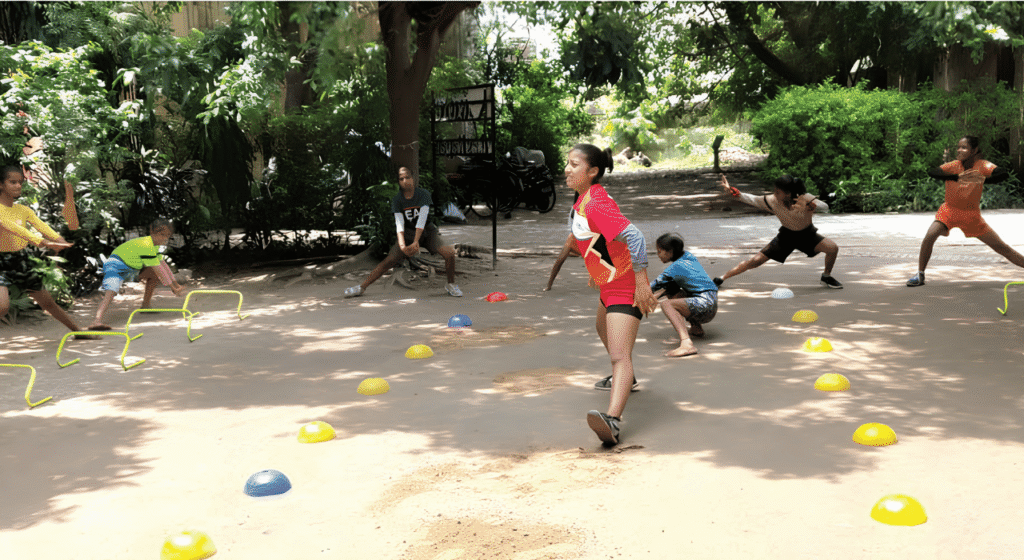
Learning Through Play is Sportz Village Foundation’s approach to making these skills more engaging, accessible and meaningful for children.

Background

The National Education Policy 2020 highlights the importance of making mathematics and computational thinking more engaging through innovative methods, including the regular use of puzzles and games.

Children are naturally curious about the world around them. Many of their questions can be explored through STEM — Science, Technology, Engineering and Mathematics. However, even though children show a natural interest in STEM at an early age, this enthusiasm often fades as they grow older.

Some key reasons include:

  • Limited interventions in education methodology or curriculum alongside technological advancements
  • Lack of grade-level learning in FLN, or Fundamental Learning and Numeracy
  • Limited use of engaging learning environments, including experiential and activity-based learning

Sportz Village’s Vision for Computational Thinking Education

Computational Thinking Education can help children develop skills that are useful not only in academics, but also in life.

Through Learning Through Play, Sportz Village Foundation aims to:

  • Help children overcome learning disabilities in numeracy and STEM subjects
  • Encourage more children to pursue and opt for STEM education
  • Build curiosity, creativity, structured thinking and problem-solving skills
  • Support the development of cognitive and non-cognitive skills for the future

The Approach

Learning Through Play is not positioned as a substitute for classroom-based STEM learning. Instead, it works as a foundational, complementary and bridge module that supports formal learning.

The approach focuses on:

1. Supporting Formal STEM Learning

Learning Through Play works alongside classroom education by making foundational concepts easier to understand through practical activities.

2. Using Play-Based Problem Solving

Developmentally appropriate problem-solving content is integrated through play and activity-based modules as a supplemental input to the core curriculum.

3. Building Computational Thinking Skills

The programme helps children at upper-primary and secondary education levels build fundamental computational thinking skills.

4. Preparing Children for the Future

The programme also helps create a foundation for 21st-century cognitive and non-cognitive skills by strengthening structured thinking, regardless of a child’s eventual career path.

Solution: Learning Through Play

Problem solving as a learning outcome is native to sport.

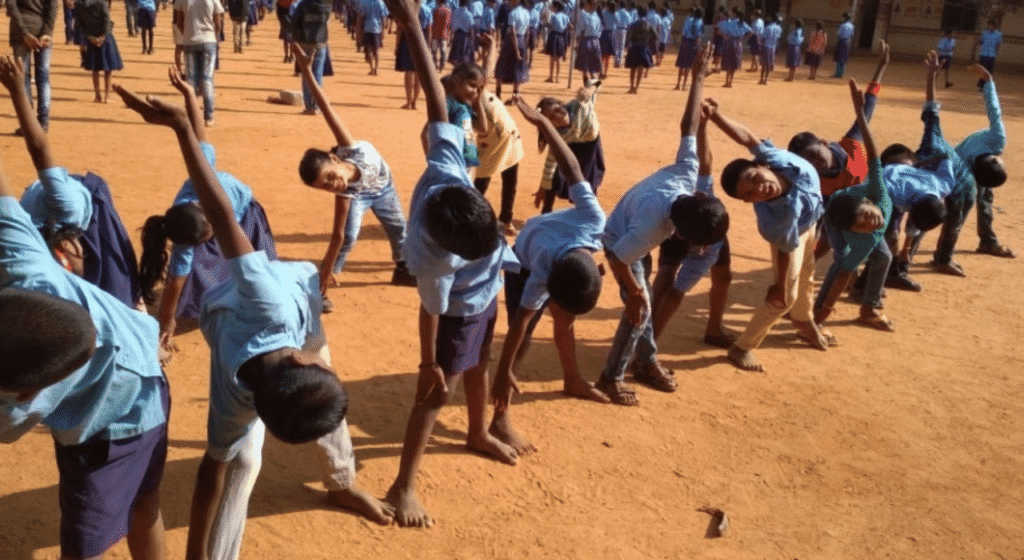
Sport and play, as a medium of intervention, naturally create opportunities for children to face challenges, think through situations, act, learn and improve.

The Learning Through Play model focuses on three key stages:

Source of Problems That Are Fun and Engaging

Children are introduced to challenges through engaging activities that encourage them to frame and understand the problem.

Engagement With Problems

Children evaluate the problem, identify patterns, abstract relevant information and initiate action.

Learning From Problem-Solving Efforts

Children reflect on their actions, measure results and learn from the outcomes of their problem-solving efforts.

Pilot Study

Sportz Village Foundation conducted a pilot study to validate the role of sport, play and activity in Computational Thinking Education.

Objective

To validate the role of play, activity and sport in building computational thinking skills among children.

Target Group

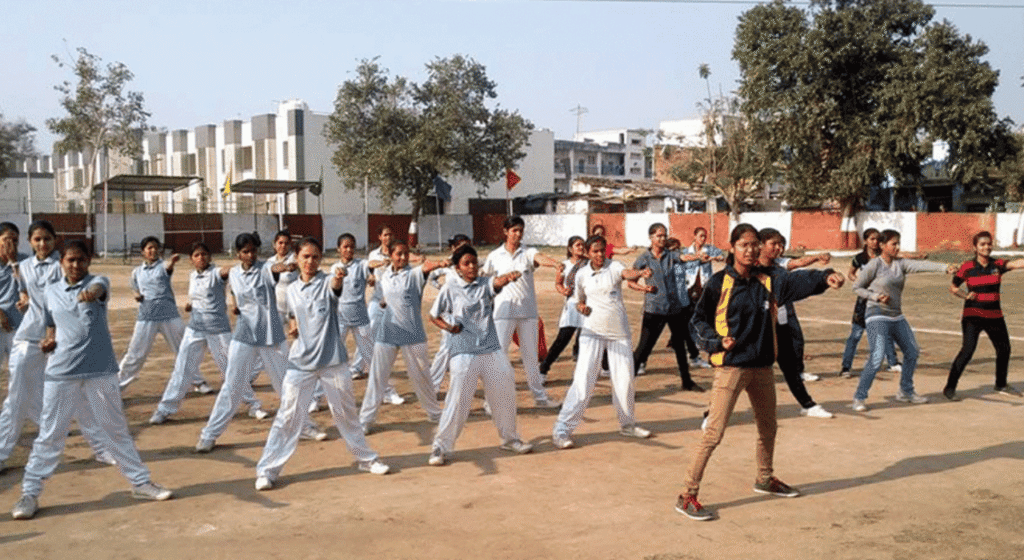
The pilot involved middle-grade students, with girls participating as part of the pilot.

  • Total Participants: 50
  • Institution: Savitri Bai Phule Girls Inter College and Athletics Sports Development Centre, Greater Noida
  • Class: Grade 8
  • Period: August to September 2020–21
  • Project: HCL Foundation

Methodology

Step 1: Identifying Key Computational Thinking Competencies

The pilot focused on five key computational thinking competencies:

  • Decomposition
  • Sequencing
  • Pattern Recognition
  • Abstraction
  • Debugging

Step 2: Gathering Primary Inputs

Qualitative inputs were gathered by the programme team to support the role of activity-based and play-based learning in improving computational thinking competencies among middle-grade children.

Step 3: Hypotheses and Indicators

The pilot used four hypotheses and measurable indicators to assess whether play-based learning could support computational thinking education.

Hypothesis: Children find content related to different computational thinking competencies interesting.
Indicator: At least 50% of children complete every activity.

Hypothesis: Children can make direct learning through computational thinking-based activity.
Indicator: Quiz question accuracy of 50% at Level 1, the Direct Learning Quiz.

Hypothesis: Children can apply their direct learning to other aspects of life.
Indicator: Quiz question accuracy of 50% at Level 2, the Reinforcement Quiz.

Hypothesis: Children can improve their overall logical reasoning and problem-solving skills after the pilot module.
Indicator: At least 60% of children show positive movement in pre- and post-programme outcome assessments.

Step 4: The Pilot Experiment

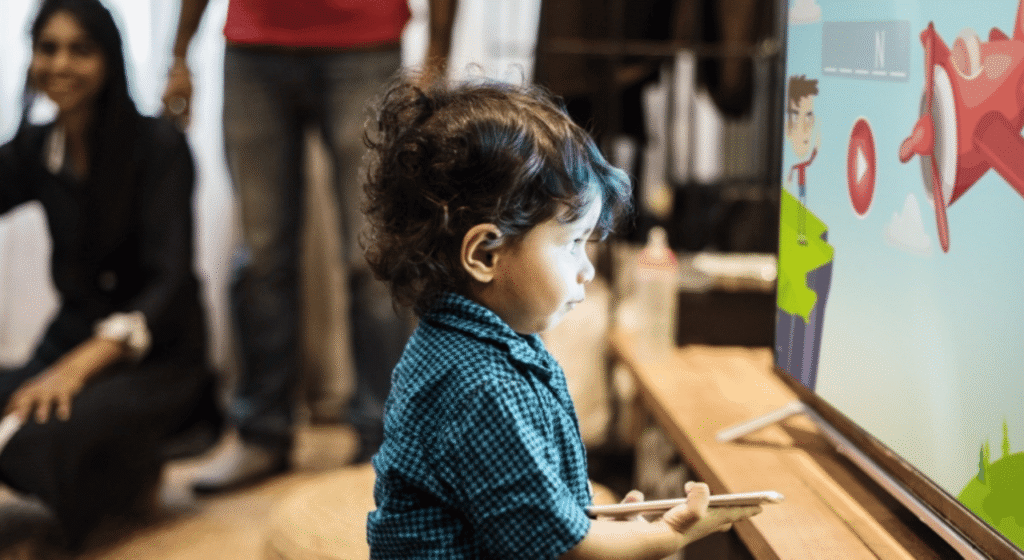
The programme was delivered through Sportz Village’s asynchronous digital platform, Play at Home Leaderboard.

The content included a series of structured, pre-recorded video-based activities, followed by quizzes at various stages of the pilot.

Each competency was assessed through a three-level quiz structure:

Level 1: Direct Learning

Quiz questions were presented immediately after a challenging activity.

Level 2: Reinforcement

A five-question quiz was conducted after the completion of each competency module.

Level 3: Programme Outcome

A pre- and post-programme 10-question quiz assessed all five computational thinking competencies.

Key Observations

The pilot showed a positive impact on learning through play and activity-based interventions.

The results indicated that children responded positively to activities they found interesting, while also showing improved real-life application of learning gained through play and activity.

Recommendations

The pilot recommended conducting a larger study to collect wider evidence and validate all key outcomes and hypotheses.

It also highlighted the opportunity to develop well-tested, age-appropriate problem-solving content and activity-based modules that can support the core curriculum.

Opportunities Ahead

Learning Through Play can help create stronger engagement in schools through activity-based computational thinking modules.

The next steps include:

  • Conducting larger studies to gather wider evidence on the role of play and sport in improving Computational Thinking Education
  • Developing well-tested problem-solving content and play-based modules that support core curricula
  • Driving school-level engagement through activity-based computational thinking programmes

About Sportz Village Foundation

Sportz Village Foundation works to transform the lives of children from underprivileged communities through the magic of sport.

The foundation works with corporates and governments to integrate structured curriculum into public schools. Its Sport for Change programme uses physical activity and sport to drive improvement in children’s health, education and empowerment.
Stories from the Field

Sports Excellence
Student Journey
Young Athletes

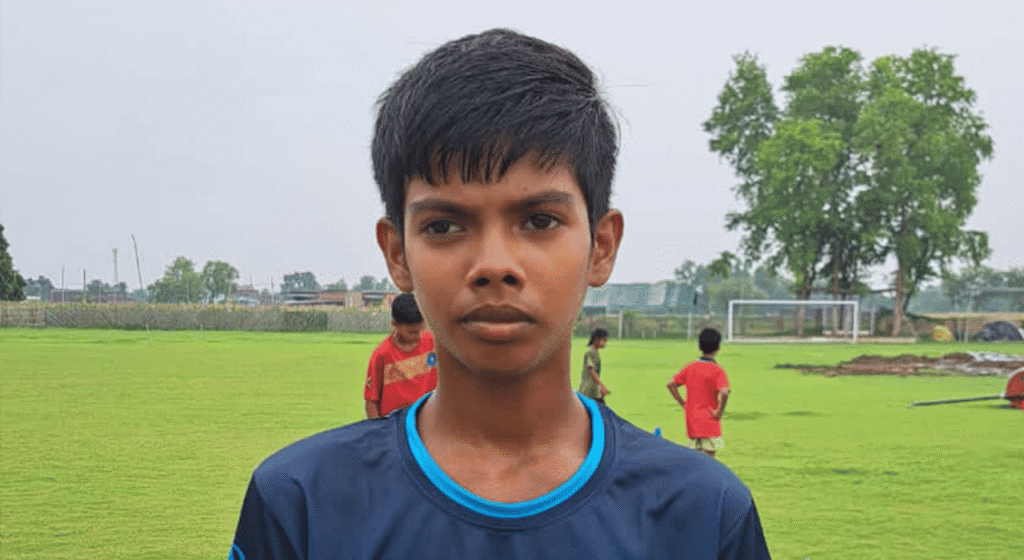
Balamurugan: The Unstoppable Journey of an Emerging Football Star

From a young student with a passion for football to a high-performance trainee supported by Sportz Village Foundation, LatentView Analytics and India Khelo Football, Balamurugan’s journey shows what the right opportunity can unlock.
Health & Wellbeing
Programme Impact
Schools

Race Around India: Keeping Children Active Beyond the Digital Divide

Race Around India is an offline, gamified physical education initiative designed to keep children active at home while reducing inequalities created by the digital and gender divide.
Girls & Women
Programme Impact
Students

Empowering Women in Sports: Understanding the Barriers Girls Face

A data-led case study that identified the social barriers preventing girls from participating in sport and outlined practical opportunities to create more inclusive sporting environments.
Education
Case Study
Students

How Structured Sports Improved Student in a Government School

A structured sports curriculum introduced in a government school in Bengaluru improved attendance and contributed to stronger behaviour, attention span and peer relationships among children.
Research & Policy
Research & Report
Students

How Sports Participation Supports the Sustainable Development Goals

A study of HCL Foundation’s Sport for Change initiative explores how active participation in sport is associated with stronger health, education and gender-equality outcomes among students in Lucknow and Noida.
Digital Innovation
Programme Impact
Students

Digital Intervention to Get Government School Children Active During the Pandemic

Supported by Bata India, Sportz Village Foundation used a self-directed and gamified digital platform to keep children from government schools active during the pandemic.
Inclusion
Community Initiative
Students

Sportz Village Foundation: Giving Every Child an Equal Opportunity

Sportz Village Foundation uses structured sports education to improve children’s health, education, confidence and access to opportunity.
Digital Innovation
Programme Impact
Students

Keeping Children Active Through the Digital Program

A six-week digital physical education pilot helped children from government schools in Tamil Nadu stay active and engaged during the COVID-19 lockdown.
Health & Wellbeing
Research & Report
Schools

2nd Annual Health Survey for Public Schools

Sportz Village Foundation’s 2nd Annual Health Survey highlights major fitness concerns among children in public schools, while underlining the importance of continuous, structured sports education.
Health & Wellbeing
Research & Report
Schools

Annual Health Survey 2019–2020: Public Schools

Sportz Village Foundation’s Annual Health Survey highlights important fitness and health challenges among children in public schools, while showing the value of structured sports education.
Education
Policy & Thought Leadership
Schools

National Education Policy 2020: Playing to Win

A look at how play and physical activity can be used as a pedagogical tool to support the educational outcomes envisioned under the National Education Policy 2020.
Education
Case Study
Schools

Ashok Leyland – Road To School

Ashok Leyland’s Road To School initiative uses structured sport to strengthen learning, health and holistic development for children in government schools across Tamil Nadu.
Girls & Women
Student Journey
Students

Roopa Chauhan Blitzes Through Barriers

From discovering Kabaddi through Sport For Change to competing at state and national levels, Roopa’s journey shows how sport can create brighter opportunities for young girls.
Inclusion
Programme Impact
Communities

Sport For Change – Project Udaan

A Sport For Change initiative by Chambal Fertilisers and Chemicals Limited and Sportz Village Foundation, positively impacting over 2,800 children and youth across 26 educational institutions in Kota and Baran.
Digital Innovation
Policy & Thought Leadership
Students

Keeping Children Active During COVID-19 Lockdown

A Sportz Village Foundation position paper on ensuring children continue to access physical activity, sport and wellbeing support during and after COVID-19 lockdowns.
Sports Excellence
Programme Impact
Young Athletes

Identifying and Developing Young Sports Talent Through HCL Foundation Schools

A structured talent identification and coaching programme that helped young athletes from HCL Foundation schools progress from fitness assessment to competitive performance.
Girls & Women
Programme Impact
Girls & Women

PADKAR: Empowering Women Through Self-Defense Training

A large-scale self-defense programme that equipped more than 2.77 lakh women and girls across Gujarat with practical skills, confidence and mental strength.
Inclusion
Case Study
Communities

Strengthening Decathlon’s Community Outreach Programme

An impact evaluation study that helped Decathlon strengthen its employee-volunteer-led school sports programme.
Education
Case Study
Schools

Ashok Leyland Sports for Change Case Study

Through the Sports for Change programme, Ashok Leyland and Sportz Village Foundation brought structured sports learning to 150 government schools in Tamil Nadu.
Digital Innovation
Programme Impact
Students

75% of Children Were Engaged in Sportz Village Foundation’s Digital Program

A 10-week digital engagement program helped children from government schools in Tamil Nadu stay physically and emotionally active during the COVID-related outbreak.
Girls & Women
Student Journey
Students

How Sarita chose Kabaddi to raid into brighter life opportunities

Sarita, a 16-year-old young student from GIC Vikas Niketan Lucknow wants to become a sports trainer and teach other children what she learnt from the sport.

Get the Complete Report

Explore the data, stories and evidence behind a year of impact through sport. Fill the form and get the report.